
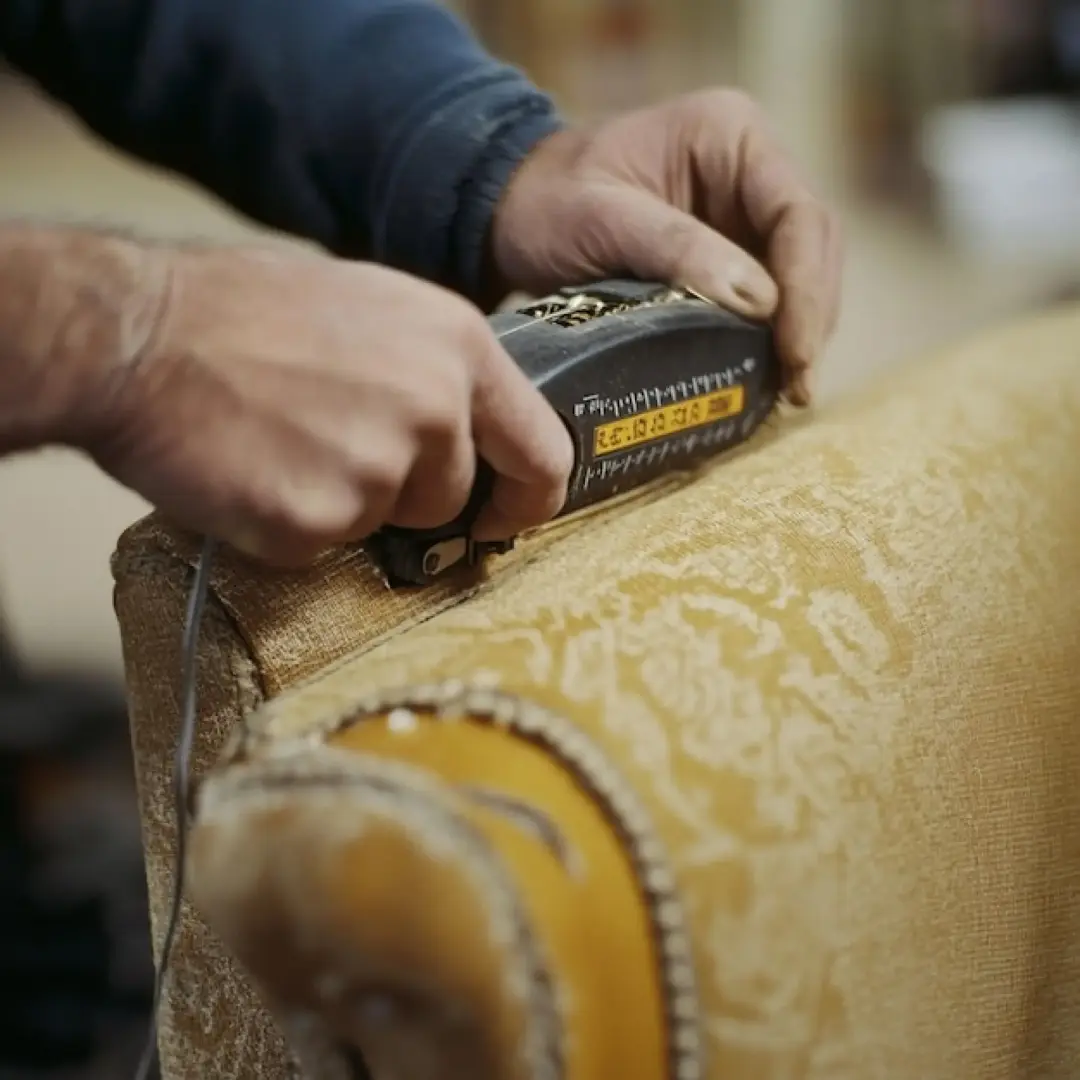
Common Reupholstery Mistakes
The most costly reupholstery mistakes usually happen before the old fabric is removed: choosing an unsuitable cloth, overlooking repairs beneath the cover or agreeing a price without agreeing the work. A successful project needs a clear specification, not just a colour sample. Here are the decisions that help prevent avoidable disappointment.
Mistake 1: ordering fabric before the furniture is assessed
A fabric can look ideal online yet be unsuitable for the piece you want to recover. Its stretch, thickness, backing and direction may affect sewing, folds and how it behaves around tight curves. Patterned material also needs a cutting plan that allows for matching.
Show your preferred sample to the upholsterer before buying the full quantity. Confirm the exact product, colour reference, usable width and intended upholstery application. If you supply the fabric yourself, agree who is responsible for checking suitability and what happens if the available quantity is insufficient.
Mistake 2: treating a rub count as a lifespan guarantee
The Association for Contract Textiles’ current abrasion guidance gives 20,000 Martindale cycles for low-traffic commercial spaces and 40,000 for high-traffic commercial spaces. These are voluntary commercial benchmarks, not a universal requirement for a domestic sofa or a prediction of years of use.
ACT also explains that higher abrasion results do not automatically mean a longer service life. Cleaning, application and other performance characteristics matter. Do not compare a Martindale result directly with a Wyzenbeek result as though the two tests use interchangeable units. Ask whether the fabric is suitable for your actual room, household and cleaning routine.
Mistake 3: recovering the surface and ignoring the support
Fresh cloth over exhausted foam can leave a sofa looking new but feeling much the same. A sagging seat may also involve webbing or springs beneath the cushions. Describe the discomfort separately from the appearance you want to change.
Ask the upholsterer to identify what is causing the problem and list the proposed remedy. If cushion interiors are to be retained, confirm that this is deliberate. If they are being replaced, discuss firmness and the feel you prefer rather than assuming a thicker cushion will automatically be more comfortable.
Mistake 4: approving colour without seeing a real sample
Screens and showroom lighting can make colours misleading. Place a sample beside your flooring and curtains, looking at it in daylight and under the lamps you normally use. Turn fabrics with a pile in both directions and see whether the shade changes.
Consider the whole piece rather than the sample alone. A bold repeat may dominate a small chair, and a very pale fabric may reveal marks around arms or seat edges. Pattern placement should be discussed explicitly, especially if a central motif needs to sit symmetrically across the back.
Mistake 5: leaving the finishing details undecided
Piping, buttoning, seams and skirt length are part of the finished design. Saying “make it like the photograph” may leave room for different interpretations. Photograph the original details you want to keep and identify those you want removed.
Agree whether cushions will have removable covers, how visible seams will be positioned and whether matching panels are included. For a patterned fabric, confirm where continuity matters. An upholsterer may need to balance matching against the shape of the furniture and the quantity available.
Mistake 6: relying on outdated safety assumptions
The government’s 2025 furniture fire-safety guidance confirms that amendments took effect on 30 October 2025. They removed the display-label requirement for new furniture while leaving permanent-label obligations unchanged. Removing a swing label requirement does not make upholstery materials exempt from applicable fire-safety rules.
Ask the professional carrying out the work to confirm how the proposed fabric, filling and upholstery construction will meet applicable requirements. Keep existing labels in place and share any product information. Do not assume that a description such as “natural”, “contract” or “flame retardant” answers every question about the finished item.
Mistake 7: comparing quotations with different scopes
One quotation may cover fabric and labour only, while another includes new interiors, repairs and collection. Ask for the same specification from each supplier. Clarify any allowances for damage found after stripping and how additional work would be approved.
Agree the anticipated schedule, fabric availability and arrangements for transporting the furniture. In Stockton, tell the upholsterer about access restrictions at the outset. A written record of decisions protects the project from assumptions on both sides.
Summary: approve the specification before the makeover
Choose material after an assessment, agree the support and repairs, and record the details that affect the finished result. A quotation is most useful when it describes the furniture you will receive, rather than simply the fabric that will cover it.