To measure furniture for an initial reupholstery quotation, record its overall width, depth and height, then measure the seats, backs and removable cushions separately. Add clear photographs and use one unit throughout. These measurements help an upholsterer understand the piece; they are not a substitute for a professional cutting plan or a guarantee of the fabric quantity required.
Prepare a simple measurement record
Use a tape measure, paper and a phone camera. Choose centimetres or millimetres and label every number with the unit. A second person can help keep the tape level across a long sofa. Sketch the outline and write measurements beside the relevant part rather than relying on a list of unexplained numbers.
Measure the furniture in its normal assembled condition. Do not remove fixed upholstery or disturb mechanisms to reach a dimension. If something is inaccessible, photograph it and explain that the dimension is approximate.
Record the three overall dimensions
Measure overall width from the outermost point on one side to the outermost point on the other. Curved arms may extend beyond the seat, so include them. Overall depth runs from the furthest front point to the furthest back point. Overall height runs from the floor to the highest point.
Keep these dimensions separate from the sitting space. A sofa that is 180 cm wide overall might have a much narrower seat between its arms. This is an illustrative example, not a standard sofa dimension. Photograph the tape in position if there is any ambiguity about the points you have measured.
Measure the seat and back
Record usable seat width between the arms and seat depth from the front edge to the point where the back support begins. Note whether the seat narrows towards the rear. Measure back height from the seat surface to the top of the back, explaining whether you have measured a fixed back or loose cushions.
For an armchair, add arm height above the seat and the width of each arm. Describe curved or rolled arms in photographs rather than trying to flatten their shape into a single straight-line measurement. A recliner should be photographed closed and open, with the mechanism left intact.
Measure removable cushions individually
Label cushions A, B and C if they differ. For each one, record width, front-to-back depth and thickness in its relaxed condition. Note rounded corners, wedges, curves and cut-outs. A T-shaped cushion needs dimensions for its projections as well as its main body.
If the old filling is badly compressed, say so. Its current thickness may not represent the intended replacement. Photograph the seams and the position of any zip, and explain whether the underside uses the same material as the top. Matching back cushions should still be measured separately because wear can change their shape.
Why furniture dimensions do not equal fabric metreage
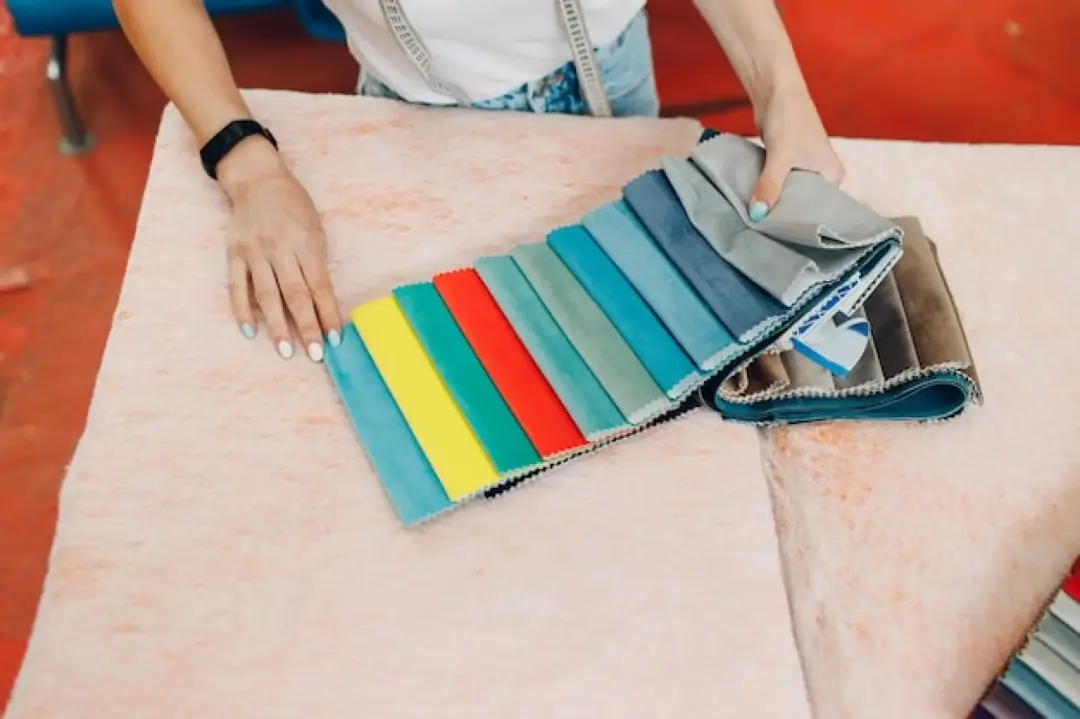
Fabric quantity depends on panel shapes, seam allowances, usable roll width, cutting direction and pattern matching. Buttoned backs, piping and skirts add components that are easy to overlook. Multiplying the sofa’s external width by its depth does not account for those pieces.
Sunbrella’s current width information says most of its fabrics are 54 inches wide, while shade and marine fabrics are typically 46 inches, with some 60- and 80-inch options. That quantitative specification illustrates why there is no single universal roll width; confirm the particular fabric rather than assuming all upholstery cloth is the same.
A repeat is another variable. Sunbrella’s Pacific Blue Fancy specification, for example, lists a 19.05 cm repeat and 117 cm width. This is a measurement example, not a recommendation for your indoor sofa. Your upholsterer should confirm quantity against the material actually chosen.
Measure the route out of the room
Record the clear opening of doors rather than the width of the door leaf. Mention stairs, tight turns, narrow corridors and lift restrictions. Overall furniture dimensions matter here, but successful access can also depend on orientation and whether any parts are designed to detach.
Do not force a sofa through a gap or remove structural parts because a calculation appears promising. Share photographs of difficult access points with the collection team. A piece may fit through one doorway but have insufficient turning space immediately beyond it.
Send a complete enquiry
Include a front view, side view, rear view if accessible, cushion photographs and close-ups of damage. Send the sketch with labelled dimensions and mention the number of matching pieces. State whether you want a new cover only or also changes to cushion interiors and support.
Describe the intended fabric or send its product reference if you have one. Before ordering any material, ask the upholsterer to confirm the required quantity and whether an inspection is needed. A clear record makes the first discussion more productive and reduces the risk of avoidable assumptions.
Summary: measure to inform the assessment
Capture overall dimensions, usable seating, cushion shapes and access restrictions. Label the units and support the figures with photographs. Let the upholsterer turn those details into a specification and cutting plan before you purchase fabric.