
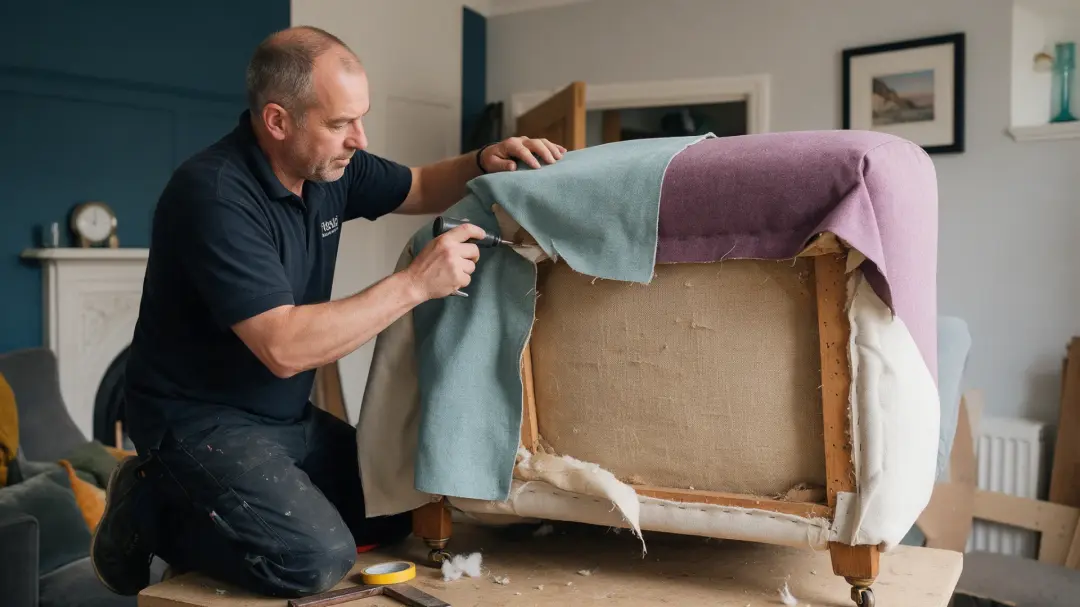
Reupholstery is often the better choice when you want to retain a repairable piece and tailor its fabric or support. Buying new makes more sense when you need different dimensions, a different function or a construction that cannot be sensibly restored. Compare the full cost and practical outcome of both options rather than assuming either is always cheaper.
Start with the change you actually need
Write down why you are considering spending money. Is the cover damaged, the seat uncomfortable or the whole design wrong for the room? Reupholstery can address worn cloth and, where appropriate, support or cushion problems. It is less likely to solve a frame that is fundamentally the wrong size.
For a household in Middlesbrough, a sofa that already fits a compact room may be difficult to replace with an equivalent. Conversely, if you now need a sofa bed or a different seating arrangement, a new design may offer a function the current furniture cannot realistically provide.
Build two complete cost comparisons
For reupholstery, include labour, fabric, cushion interiors, support repairs and transport where applicable. Clarify whether hidden damage could lead to additional work and how you would approve it. Ask what will remain original and what the quotation replaces.
For new furniture, include delivery, assembly if charged, removal of the old piece and any options required to achieve the finish shown. Compare similar sizes and construction. An inexpensive mass-produced sofa and a detailed restoration of a substantial frame are different purchases, even if both provide three seats.
The British Heart Foundation’s April 2025 survey found that 45% of respondents had delayed buying needed furniture because they could not afford it. The research surveyed 4,550 people. That finding shows why an affordable scope matters; it does not tell you what your reupholstery quotation should cost.
As a broader budget reference, the ONS release of 16 September 2026 reported UK consumer-price inflation of 3.1% in the year to August 2026. That is an all-items measure, not a furniture price increase or a reason to adjust an old quotation by the same percentage. Obtain current prices for the actual work and replacement you are comparing.
Use cost per year as a question, not a promise
An illustrative comparison can help: spending £1,200 on a piece used for eight years would work out at £150 per year, while £800 over four years would be £200 per year. Those figures are hypothetical arithmetic, not quoted prices or predicted furniture lifespans.
The difficult part is estimating future use. Consider the condition of the structure, the intended fabric, available repair options and whether your household’s needs are likely to change. A lower annual figure based on an unrealistic lifespan is less useful than an honest comparison of the choices you can afford.
Compare comfort before making a decision
With reupholstery, discuss the problem you want to fix: sinking too far, pressure beneath the thighs or uneven cushions. Depending on the construction, an upholsterer may recommend changes to filling or support. Ask how the proposed result will differ from the current feel.
When buying new, sit on the actual model where possible rather than judging it by photographs. Check seat depth, back support and how easily you can stand. A replacement that looks attractive but feels wrong may leave you solving a second furniture problem soon after the purchase.
Consider choice, timing and disruption
Reupholstery can provide a wider choice of cloth than a particular retailer offers on a stock model. It can also retain details you value, such as an unusual outline or decorative frame. Agree samples and finishing details before work begins.
However, your furniture may be away during the work, and fabric availability can affect scheduling. A new sofa may be available quickly from stock, or it may have its own manufacturing lead time. Ask both suppliers for realistic dates and consider how you will manage without the piece. Neither option is automatically the faster one.
Think about what happens to the original furniture
Keeping a usable frame avoids replacing that part of the furniture, but new fabric and filling still require materials. Ask which components will be retained. Avoid attaching a fixed carbon saving to a restoration unless it has been assessed for that particular work.
If you buy new, look into reuse of the old item while planning delivery. A charity or other recipient will need to confirm condition and acceptance requirements. Do not remove existing fire labels. Donation is not guaranteed, and removal services should explain where the furniture will go.
A balanced way to choose
Reupholstery deserves consideration if the piece suits your space, has a repairable structure and offers qualities you would struggle to replace within budget. Buying new deserves consideration if the design no longer meets your needs, the repair scope is extensive or a suitable replacement offers a clearer overall benefit.
You can also ask whether a smaller intervention would solve the main problem. New cushion interiors or a local repair may be enough when the existing cover remains serviceable. Comparing three sensible scopes is often more useful than forcing a choice between a complete makeover and a complete replacement.
Summary: compare the outcome as well as the price
Set a realistic budget, obtain an assessment and compare equivalent specifications. Reupholstery can preserve furniture you still enjoy, while a new piece can meet needs the old one cannot. The best choice gives you a suitable, comfortable item at a cost you understand.